
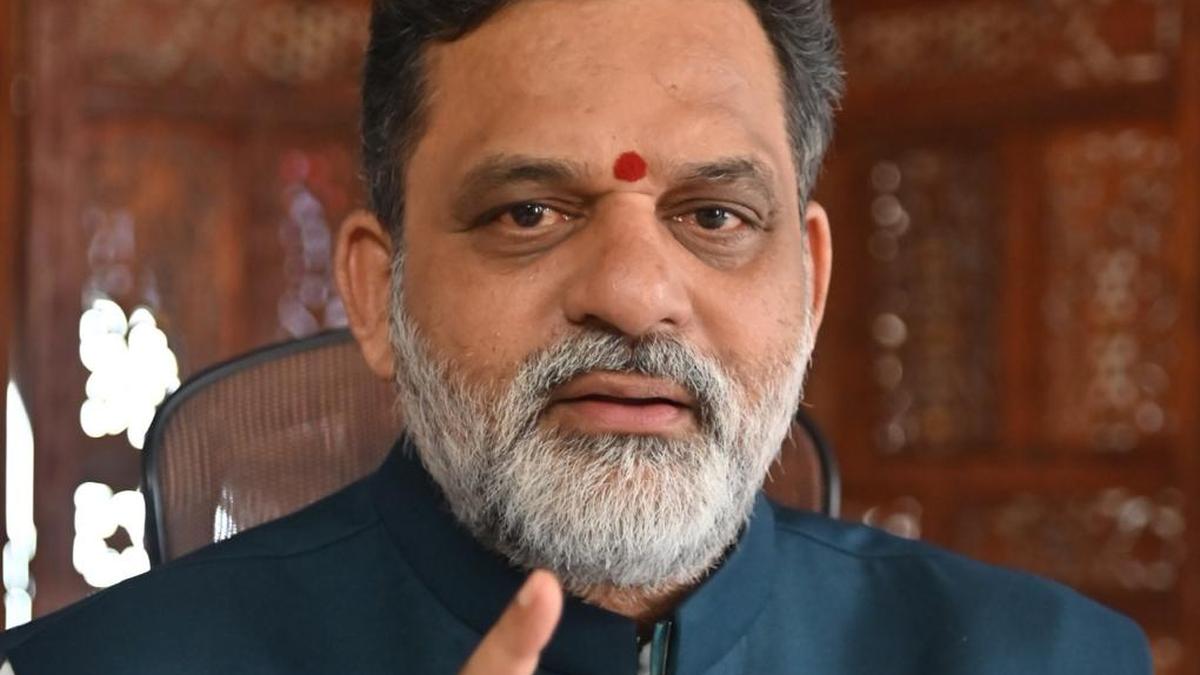

Vakulabharanam Krishna Mohan Rao, former Chairman of the Telangana State Backward Classes Commission
| Photo Credit: BY ARRANGEMENT
Failure to frame a lawful policy, in accordance with the Supreme Court judgments, has pushed the issue of 42% Backward Classes (BC) reservations in Telangana rural local bodies to a situation where the State government has no other option but to start from scratch the exercise to provide the enhanced reservations to BCs, according to Vakulabharanam Krishna Mohan Rao, former Chairman of the Telangana State Backward Classes Commission.
“When a State seeks to cross the 50% ceiling, the minimum requirement is that commissions should be quasi-judicial in nature, independent in operation, and vested with civil court powers.” So, unless the current policy — full of legal flaws — is addressed from the first step, there is no way the desired result can be achieved.
Mr. Rao said that all three stages of arriving at 42% reservations lagged the legality and statutory powers, from the Social, Educational, Employment, Economic, Political, Caste (SEEEPC) Survey, to the constitution of the Dedicated Commission headed by Busani Venkateshwar Rao and finally the Justice Sudershan Reddy Committee.

Recalling the Constitutional framework, he said the Supreme Court in Indra Sawhney v. Union of India (1992) ruled that reservations must rest on contemporaneous empirical data and cannot exceed the 50% ceiling, barring proven extraordinary circumstances.
In K. Krishna Murthy v. Union of India (2010), the Court prescribed the ‘Triple Test’ for local body reservations, which include a dedicated independent commission must conduct an empirical survey, quantifiable data must establish inadequate representation and the overall quota must not breach the 50% ceiling. It was reaffirmed in the Vikas Kishanrao Gawali v. State of Maharashtra (2021) case.
Mr. Rao says Telangana did not meet these constitutional benchmarks. The SEEEPC Survey conducted by the Planning Department, was not under a statutory commission. The Busani Venkateshwar Rao Commission was a single-member commission headed by a retired IAS officer, with no statutory basis under Article 340 and without multi-expert participation.
Similarly, the Justice Sudarshan Reddy Committee, despite the eminence of its members, was only an advisory body without the statutory mandate. Neither of the bodies body undertook household-level socio-economic field surveys nor statewide public hearings, he said.
Published – October 23, 2025 04:00 pm IST