


Creating waves across the world
| Photo Credit: Getty Images/iStockPhoto
Legend has it that, thousands of years ago the Chinese emperor Shen Nong was boiling water in his garden when a leaf fell into it. To the emperor’s delight, this produced an oddly comforting drink: tea! By the eighth century, the brew had spread to Japan and Korea, and even made its way into a famous book, The Classic of Tea by the Chinese scholar Lu Yu. Eventually, merchants carried the leaves westward and, by the mid-17th century, Europeans had taken to the comfort of black tea; a fermented version of the original green tea consumed in China. But Europe’s affair with tea stirred up storms that would change history.
The first major revolt over this rather plain-looking plant broke out in 1773 on the Charles River in Boston, Massachusetts, the U.S. Protestors climbed on to ships carrying tea and emptied the contents into the water. They were angry with their British rulers for imposing an unfair tax on tea imported into America. This daring act of rebellion came to be famously called the Boston Tea Party. Soon, the ferment spread across the land and sparked off a revolution for American independence from the British.
Far away from this upheaval, another storm was looming in the East. China, which sold most of the world’s tea, wasn’t interested in anything except precious metals in exchange. This expensive bargain had left European merchants deeply frustrated, until they hit upon the clever idea of exchanging medicinal opium, drawn from the opium poppy, for Chinese tea. But opium was also dangerously addictive and by the 19th century China came down heavily upon this trade that had turned a large number of its people into addicts. The crackdown flared into full-fledged wars between China and the British empire, leaving the latter scrambling for alternative sources of tea.
Indian variety
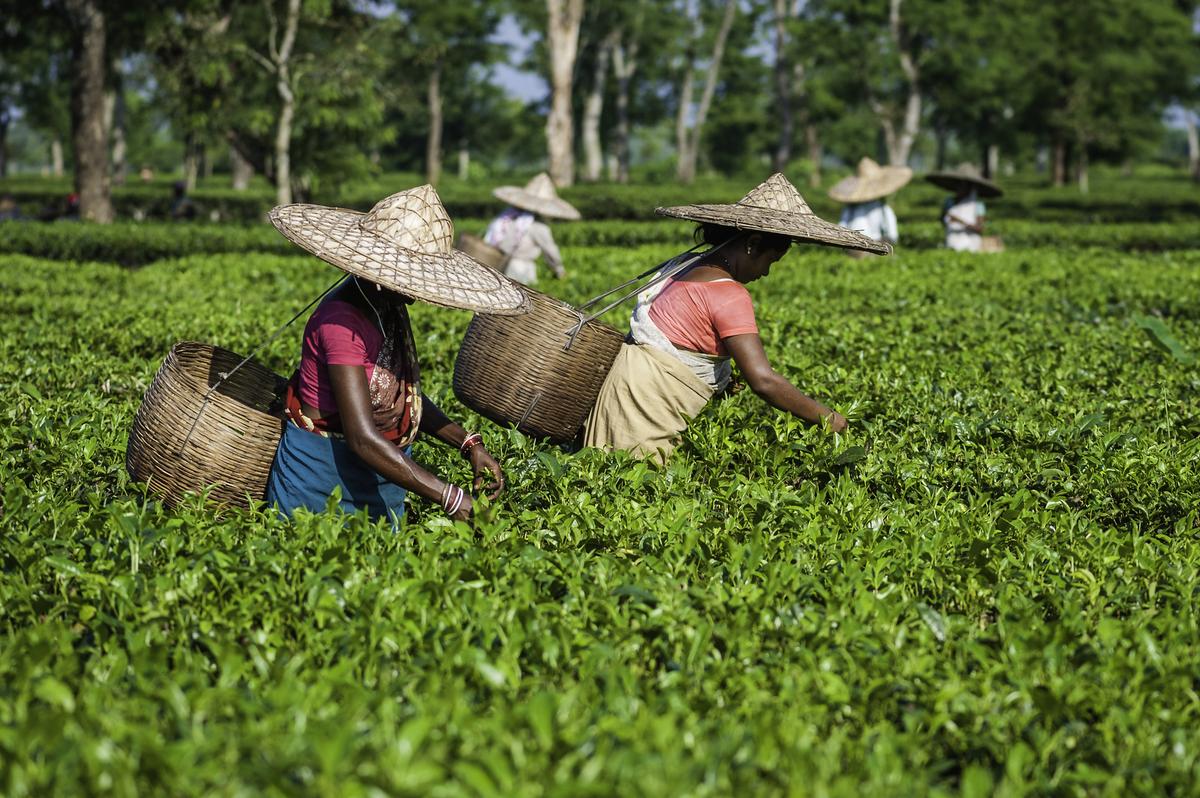
Harvesting tea leaves in Assam
| Photo Credit:
Getty Images/iStockPhoto
In 1823, Scottish adventurer Robert Bruce had stumbled upon wild tea plants, related to the Chinese variety, in the Brahmaputra Valley in Assam. These were quickly brought under cultivation and, in 1839, a small batch of this ‘Assam tea’ was auctioned for the very first time in London. Finding demand, the British began growing and exporting more and more Indian tea to Britain and, by the end of the 19th century, these exports had overtaken Chinese tea.
Initially very little tea was consumed in India, but during the 20th century, a fall in international trade prompted tea merchants to target Indian consumers. Slowly, India took to the taste of tea, concocting its own variants by adding spices like ginger, cardamom, cloves and cinnamon. Today it is the world’s biggest consumer of tea. Did you know the Indian word for tea, chai, comes from the Chinese word chá?
Published – October 24, 2025 12:05 pm IST