
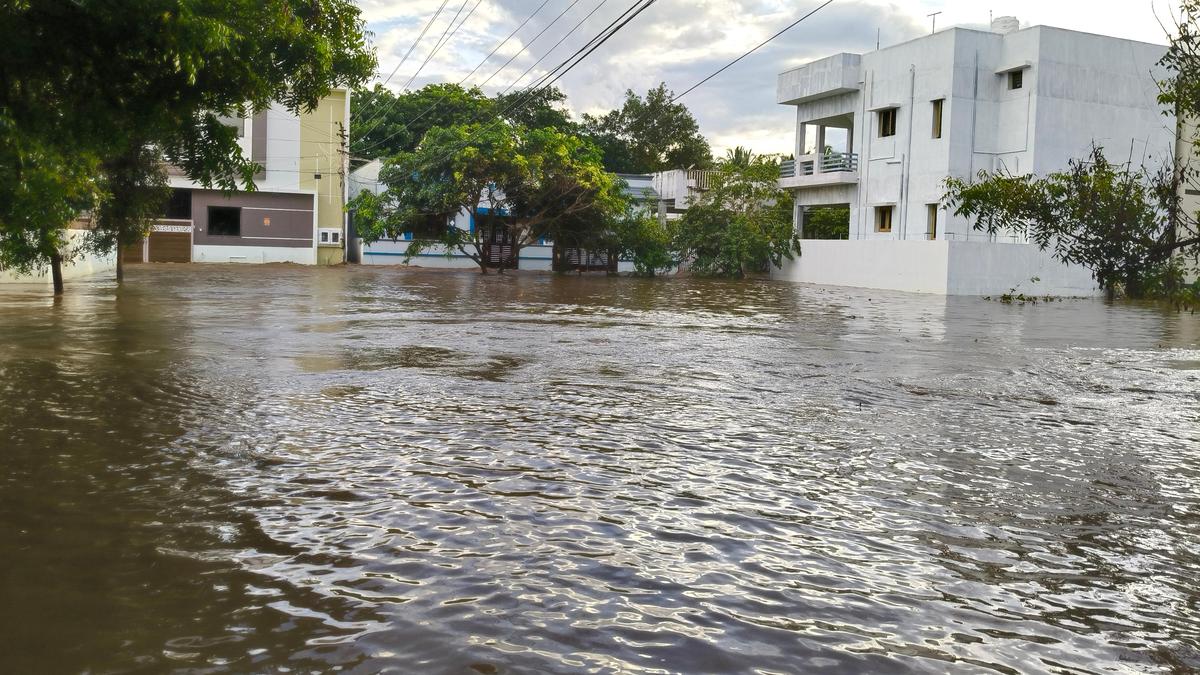
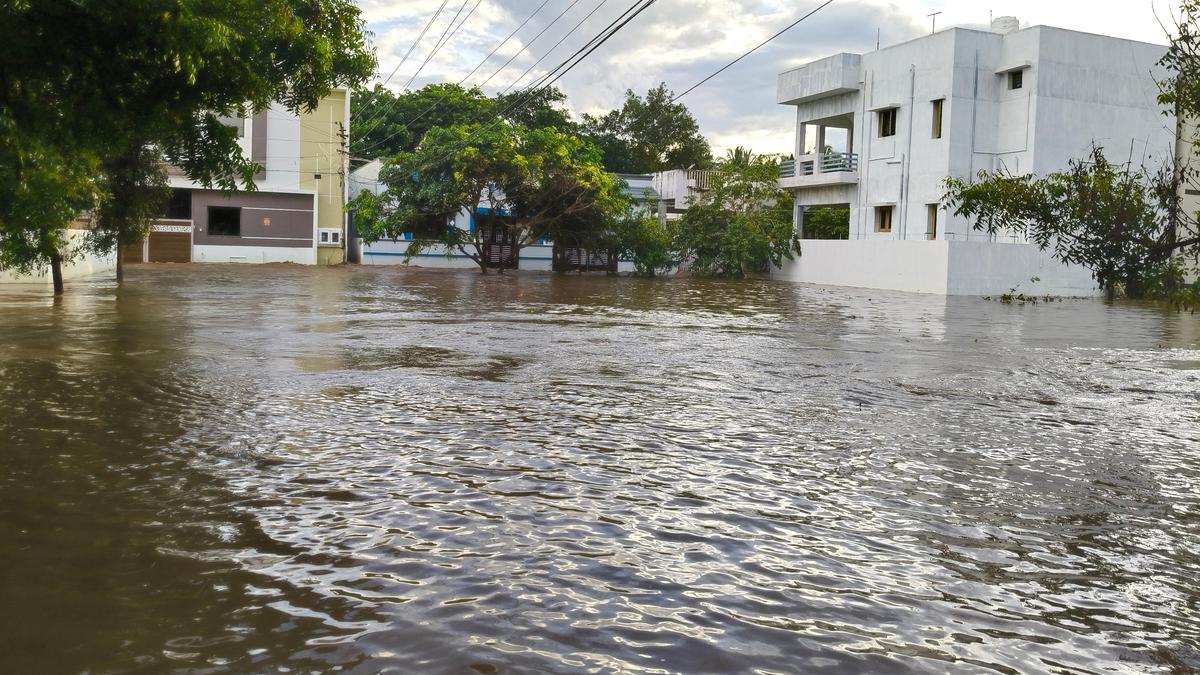
Water from Mullaperiyar river that had inundated houses at Anjaneya Nagar in PC Patti near Theni on October 17, 2025.
| Photo Credit: Special Arrangement
On October 17, Cumbum valley experienced a light drizzle, even as heavy rain pounded the western ghats.
The fast flowing Mullaperiyar river was touching the banks. Heavy flow at Chinna Surli, Surli and Suraganur falls combined with discharge of water from Mullaperiyar dam was raising the water level in the river at an alarming speed.
By afternoon, the river had overflown its banks.
Paddy fields adjacent to the river were the first casualty. In many farms, the young crop had just reached the pinnacle formation stage and were under water. Ten houses were damaged near Cumbum and Surulipatti. The floods also swept away 40 goats near Surulipatti.
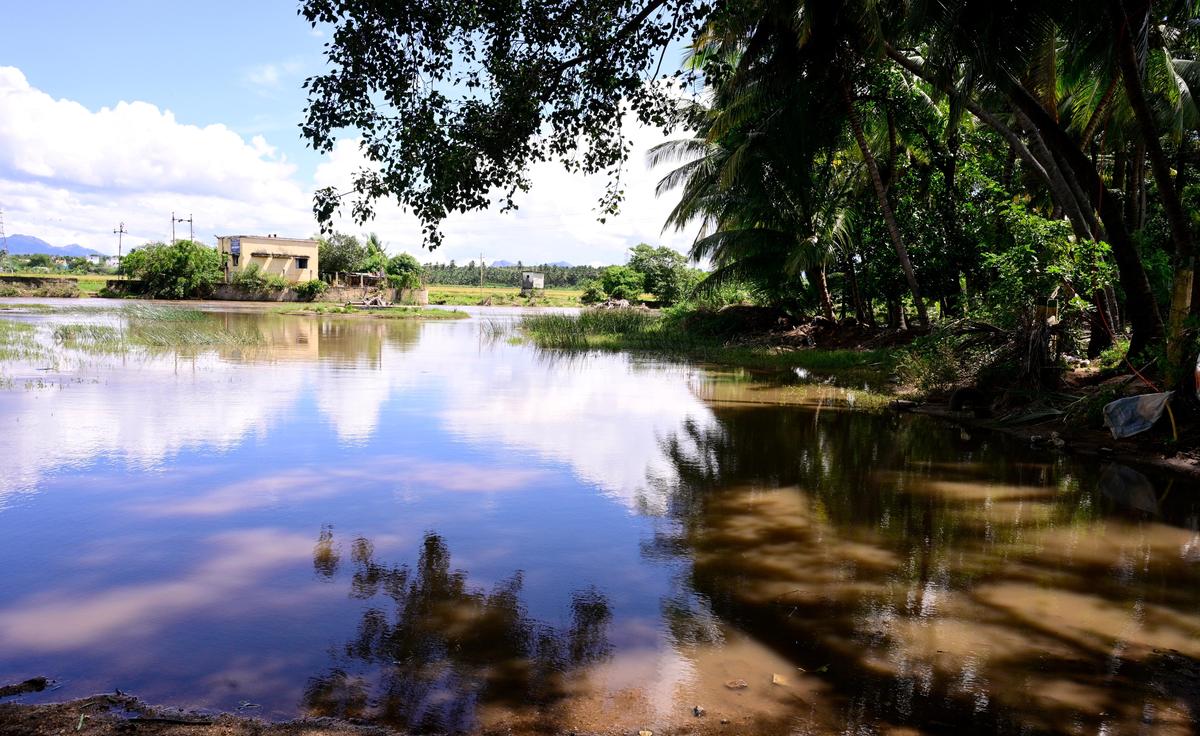
A joint drinking water pumping station at Uppukottai in Theni district is cut off from the mainland by the swollen Mullaperiyar river.
| Photo Credit:
KARTHIKEYAN G
In Uppukottai, the raging water submerged numerous pumping units and many villages went without water. On Wednesday almost five days after the flooding, the Govindanagaram pumping station was being repaired and residents of ten villages, were waiting to get their share of potable water from this station. “Work is underway and very soon, the supply will resume,” say workers at the unit.
Few kilometres downstream, as the river reaches PC Patti, the breadth shrinks. On one side of the river bank are concrete residential structures, while on the other side coconut groves have encroached the river course
“We experienced significant overflow during 1997 and 2002, but during that period, all these areas were agricultural land and there were very few houses and no hue and cry was raised,” says a resident of Uppukottai.
Now, with bypass roads and link roads crisscrossing the district, Pasumai Senthil from Uthamapalayam says many farmlands adjacent to the river have been filled with gravel and left uncultivated. “Later, it will be divided into plots and will become a residential area. Sometimes, encroachments even block the feeder channels from the river leading to water entering residential areas,” he adds.
“In Uthamapalayam, numerous encroachments have come up on the river banks leading to obstruction in the flow of water,” he says.
Anjaneya Nagar in PC Patti, has been formed on fertile lands that abut the Mullaperiyar river. A densely populated residential area, it is a DTCP approved layout and buyers are lured by the excellent water table.
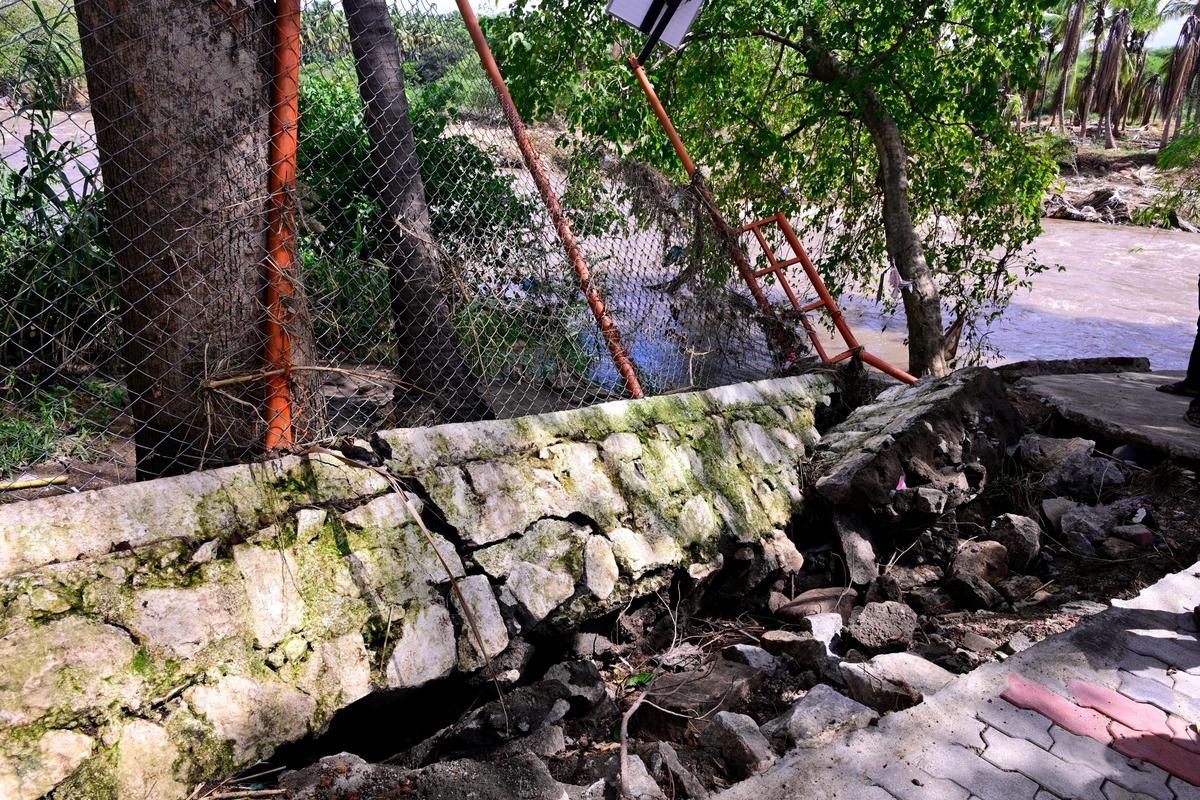
The parapet wall near Mullaperiyar river that was damaged by the floods at Anjaneya Nagar in PC Patti near Theni.
| Photo Credit:
KARTHIKEYAN G
Officials in Theni are helpless. “On that day 156 mm rainfall was recorded in Thekkadi and it was unprecedented. The Theni Thasildar had visited the area and had asked them to move to an identified safe location. But except for one family, many remained there. Then when the flooding happened we had to use earth-movers to help the families. Thankfully, within hours the water receded,” an official added.
Though many States in India have clear rules that prohibit construction within a specified distance from any waterbody, in Tamil Nadu there seems to be a lacunae.
In a recent judgment given by a Division Bench of Justices G.R. Swaminathan and B. Pugalendhi at the Madurai High Court, it observed that a waterbody cannot be confined only to the land where the water gets actually collected. It includes bund, foreshore area and water spread area. These are all government poramboke.
If this ruling is taken into consideration, then urbanisation seen along Mullaperiyar river has failed to take into account the foreshore and water spread area of the river. If this gap, literally and physically, had been addressed, then flooding may have been restricted to a smaller area.
Published – October 23, 2025 06:24 pm IST