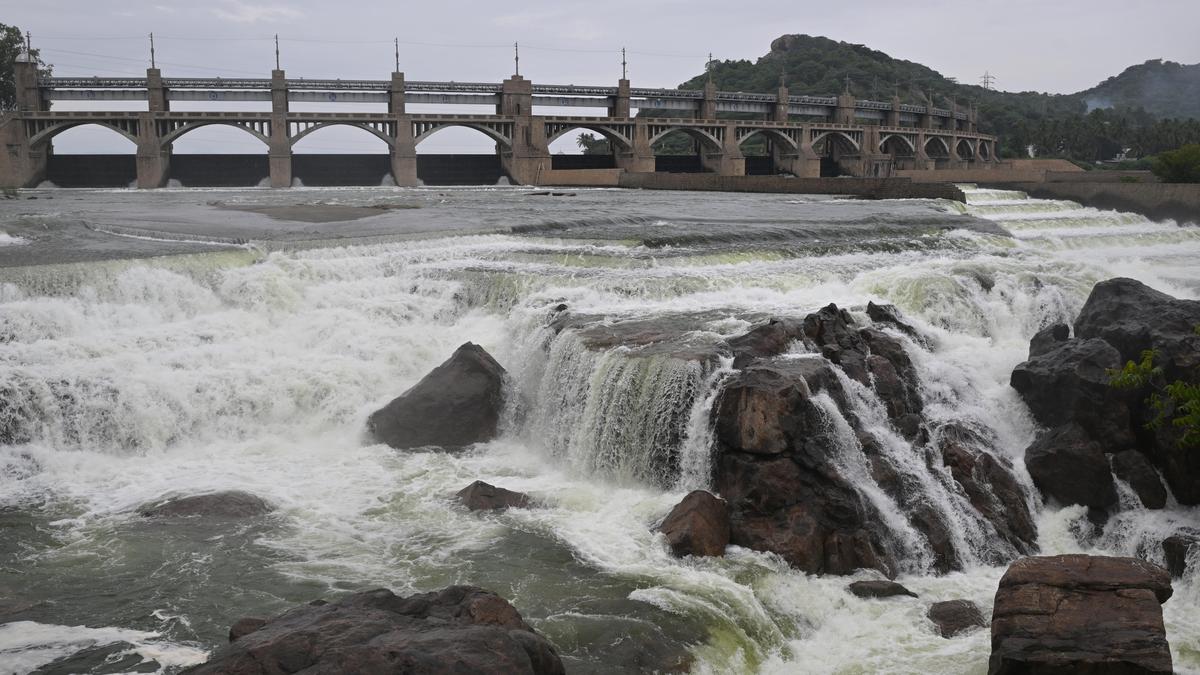
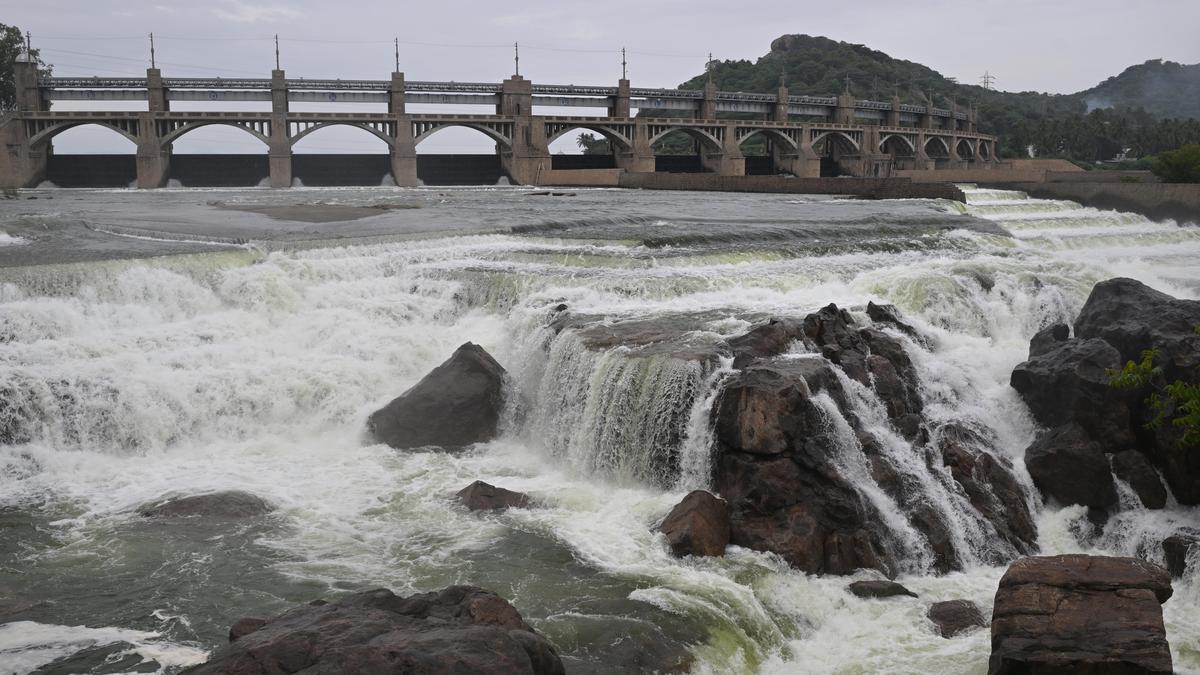
Surplus water gushing out of the 16-vent Ellis Saddle surplus slices from the Stanley Reservoir in Salem district.
| Photo Credit: LAKSHMI NARAYANAN E
With the water level at the Stanley Reservoir in Mettur being maintained at the full reservoir level (FRL) of 120 feet for the third consecutive day, 35,500 cusecs of surplus water was discharged into the Cauvery on Wednesday.
At 8 a.m., the inflow was 35,500 cusecs, while the water level stood at 120 feet. The storage was maintained at the dam’s maximum capacity of 93.47 tmcft. Of the total discharge, 18,300 cusecs was released through the powerhouses, and 16,700 cusecs through the 16-vent Ellis Saddle surplus sluices. The discharge in the east and west bank canals stood at 500 cusecs.
The dam has attained FRL seven times this year — on June 29; July 5, 20, and 25; August 20; September 2; and October 20. The last time the dam reached FRL seven times in a year was in 1977. In 2024, it attained FRL three times.
Meanwhile, surplus water continued to be discharged from the Bhavanisagar Dam in Erode district for the second consecutive day on Wednesday. As per flood regulation norms, the permissible storage levels at the dam vary by month — 100 feet during June and July, 102 feet from August to October, and up to 105 feet in November and December. The water level touched 102 feet on Tuesday, after which the discharge of surplus water into the Bhavani began.
At 8 a.m., the water level stood at 102 feet, with a storage of 30.31 tmcft as against the full capacity of 32.80 tmcft. The inflow was 9,567 cusecs, while the surplus discharge was 8,500 cusecs, and 1,000 cusecs was released into the Lower Bhavani Project canal. As flooding continued at the Kodiveri anicut across the Bhavani, the ban on bathing and fishing remained in force, and tourists were not allowed to enter the anicut area.
Published – October 22, 2025 05:53 pm IST