
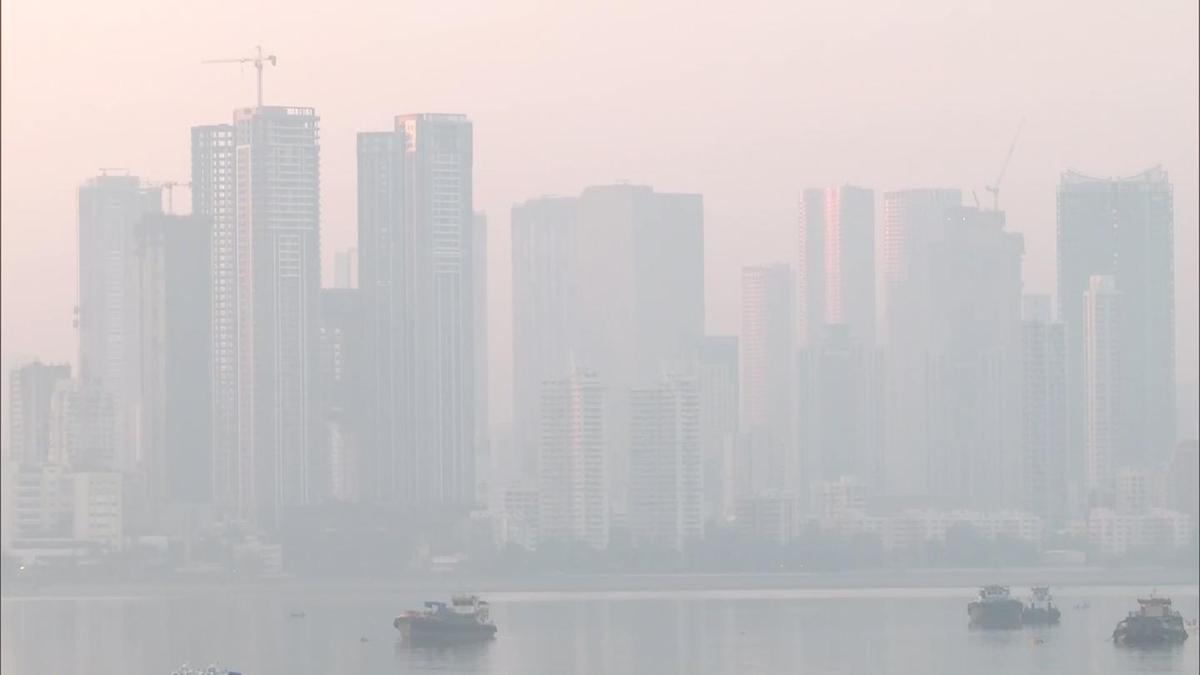
October 2025 has emerged as Mumbai’s most polluted month of the year so far, with 19 monitoring stations recording their highest daily average PM2.5 levels and seven stations registering their peak PM10 levels since January. The spike in pollution was observed between October 18 and 22, coinciding with the festive period, which typically sees increased vehicular movement, construction activity, and firecracker usage.
The data sourced from the Central Pollution Control Board (CPCB) was compiled and analysed by the Centre for Research on Energy and Clean Air (CREA). In Mumbai, air quality is tracked through Continuous Ambient Air Quality Monitoring Stations (CAAQMS) installed and operated by the Maharashtra Pollution Control Board (MPCB), Indian Institute of Tropical Meteorology (IITM), and Brihanmumbai Municipal Corporation (BMC).
Manoj Kumar, Analyst at CREA, said, “October 2025 stands out as Mumbai’s most polluted month so far this year, with air quality levels peaking across several parts of the city. Between October 18 and 22, 19 stations recorded their highest daily PM2.5 levels and seven stations their peak PM10 levels since January.” He added that with the festive season in full swing, Mumbai’s air quality had declined further, exposing people to unhealthy pollution levels. “While celebrations draw more people outdoors, the air remains unsafe to breathe. It’s crucial for authorities to address not just seasonal pollution spikes but also everyday sources like construction dust, traffic emissions, and other contributors that steadily degrade air quality. Protecting public health must remain at the heart of the city’s response,” Mr. Kumar said.
Fine particles like PM2.5 and PM10 (particulate matter) are the main pollutants affecting Mumbai’s air. These tiny dust and soot particles come from everyday sources, vehicles, construction, and burning, and are key indicators of how polluted the air really is. PM2.5, often referred to as “fine particles,” is significantly smaller and can bypass the body’s natural defenses. The real danger, as the World Health Organization (WHO) points out, is that PM2.5 particles are small enough to pass from the lungs directly into the bloodstream. Once in the blood, they can travel to the heart, brain, and other organs, increasing the risk of serious health problems like heart attacks and strokes. This is why PM2.5 is a major health concern, especially for children, seniors, and anyone with existing heart or lung conditions, Mr. Kumar explained.
PM10, on the other hand, is coarse dust in the air, particles from construction sites, roads, and general industrial grit. These particles are tiny (10 micrometres or smaller), small enough to breathe in. They get stuck in the lungs and airways, which can irritate the eyes, nose, and throat and worsen conditions like asthma. Persistently high concentrations of PM10 and PM2.5 pose serious health threats, especially to vulnerable populations like children, the elderly, and those with pre-existing conditions. Long-term exposure increases the risk of respiratory illnesses, cardiovascular diseases, and cancer.
“While the Air Quality Index (AQI) is commonly used to communicate pollution levels to the public, PM2.5 data offers a more precise measure of health risks. Unlike AQI, which simplifies multiple pollutants into a single index, PM2.5 provides exact concentrations, allowing for better assessment of trends, health impacts, and policy effectiveness,” he added.
Among the worst-hit areas during the October spike are Bandra Kurla Complex, where PM2.5 peaked at 212 µg/m³ on October 21, Malad West at 188 µg/m³, Navy Nagar in Colaba at 167 µg/m³, and Mazgaon at 130 µg/m³. For PM10, the highest daily averages were recorded at Malad West (322 µg/m³), Deonar (321 µg/m³), and Mulund West (234 µg/m³). “These figures far exceed the CPCB’s permissible limits of 60 µg/m³ for PM2.5 and 100 µg/m³ for PM10 for a 24-hour average,” Mr. Kumar explained.
Between October 18 and 21, the number of stations breaching PM2.5 standards ranged from 17 to 23. For PM10, the breaches were even more widespread, with up to 28 stations exceeding safe limits on October 20.
A year-wise analysis of PM2.5 concentrations during Diwali periods from 2022 to 2025 shows a worrying upward trend. In 2022, the highest PM2.5 level was recorded at Chakala-Andheri East (IITM) at 174.56 µg/m³. In 2023, Chembur (MPCB) saw the highest at 144.04 µg/m³. In 2024, Mindspace-Malad West (MPCB) peaked at 196.73 µg/m³, and in 2025, Malad West (IITM) recorded 187.78 µg/m³.
Published – October 24, 2025 12:55 am IST