
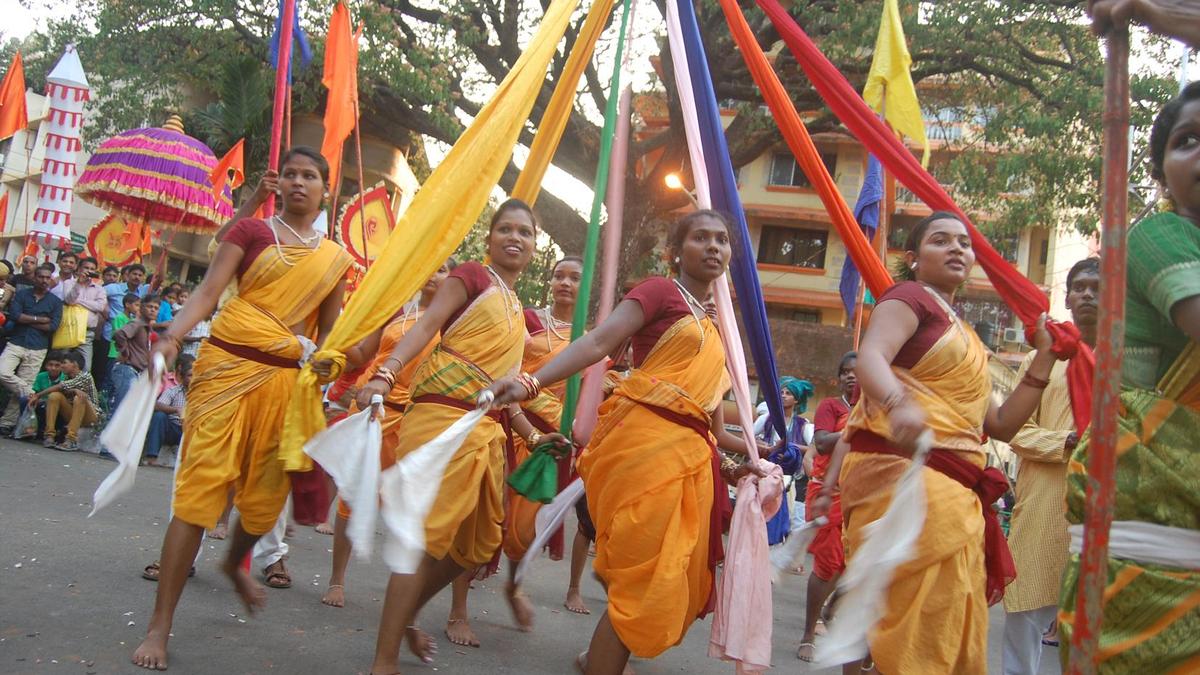
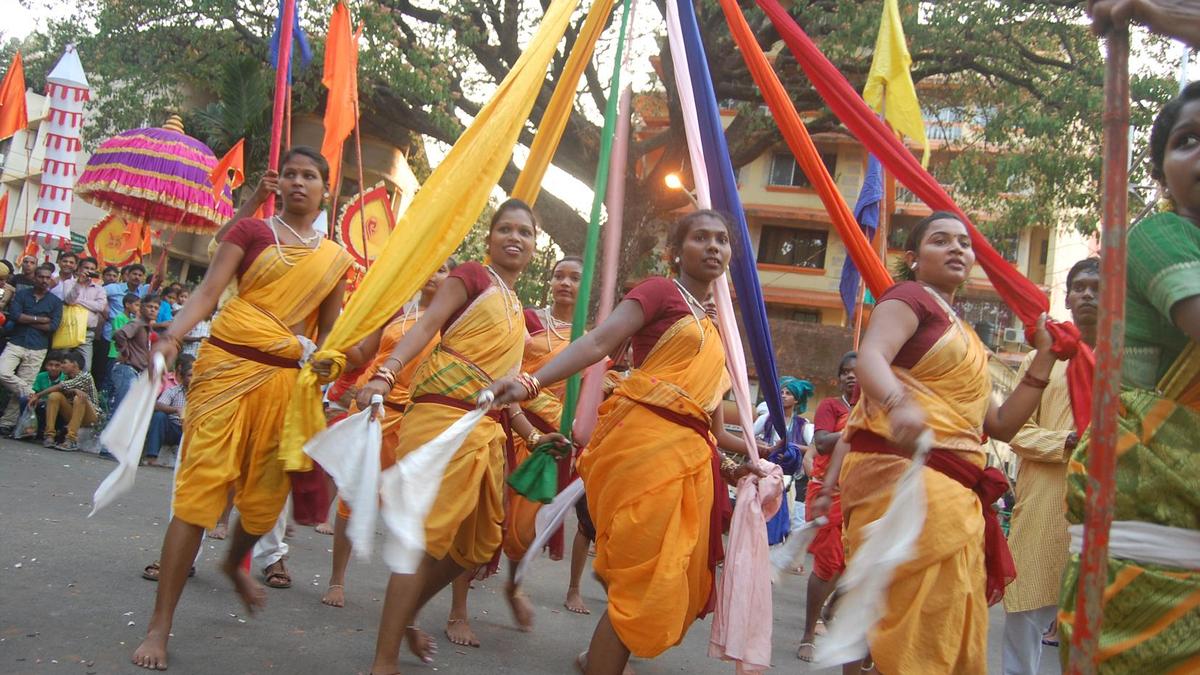
A Shigmotsav parade in Panaji, Goa in 2015.
Daya Pawar’s Baluta (translated into English by Jerry Pinto in 2015) stirred the literary world, beginning the tradition of Dalit autobiographies that are equal parts communal and personal. Published in Marathi in 1978, it shed light on the lives of Mahars in Maharashtra, letting the readers in on the oppression that they are a part of. The shock, the horror, the terror — it showed the lives of untouchables of the Mahar-wada with deep honesty and grave intensity.

In 1986, Baby Kamble became the first Mahar woman to publish her autobiography, The Prisons We Broke (translated into English by Maya Pandit in 2008). She dived into the doubly oppressed lives of Mahar women by caste and patriarchy, describing the domestic lives of women in great detail with a focus on the ritualistic celebration of various festivals and weddings.
Mahars of Goa
These seminal autobiographies of the community alone have set the stage where readers today are aware of the oppression and atrocities of the caste system against Mahars in Maharashtra. However, a lot remains unsaid today on the Mahars of the neighbouring State, Goa. Ever since Dadu Mandrekar became aware of the caste system in his youth, he worked towards making the lives and sufferings of the Mahars, his people, in Goa and the Konkan region visible. He undertook the mapping of various customs and rituals practised in various Mahar-wadas set on the outskirts of villages. With every visit to such Dalit vastis, he was enraged as well as disappointed. In Untouchable Goa, published in Marathi in 1997 and translated posthumously by Nikhil Baisane in 2025, this Ambedkarite-journalist records the terrifying traditions practised by the impoverished untouchables in lush Goa.
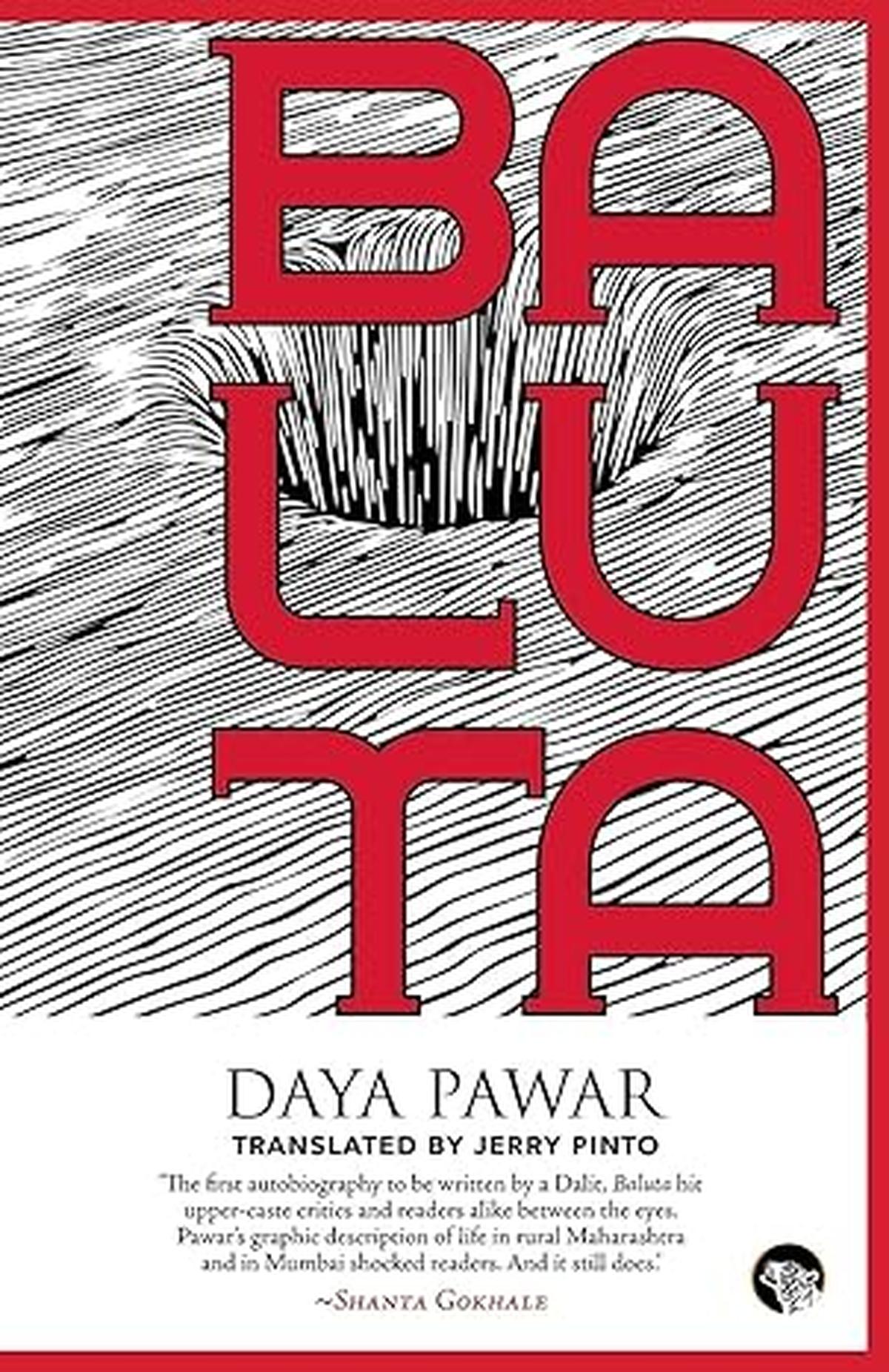
Pawar states, “The Mahar men worked as hamaals or labourers. Some worked in the mills and factories. None of the women observed purdah. How could they? They worked harder than men. They scavenged scraps of paper, rags, broken glass and iron from the streets, sorted them out and then sold them each morning.” Kamble also details the various roles bestowed on women during festivals in the systematic absence of education and awareness. Both look at the lack of dignity in the lives lived in poverty as a result of the caste system.
Rituals with the dead
To highlight this further, Mandrekar begins with macabre tales of the arrival of spring marked by Shigmotsav in villages of Dicholi Taluka. Central to the celebration in this area is the custom of Gade wherein the remains of the dead, mostly women, are “exhumed, tied to long sticks, and paraded in a grotesque dance in a massive courtyard before the village deity.” They are later discarded with indifference.
He elaborates in detail the funeral practices designed to outcast women even in their death, practices that are closely related to menstruation. He questions followers of Manusmriti for such treatment of women, who are life-givers. In another taluka, he looks at communal graves. Mahars don’t have assigned land for themselves where they can bury their dead. So, they dig two ditches, one for men and the other for women. The dead are tossed on top of each other, sometimes by removing bodies of people who have died before. Mandrekar’s heart breaks at such lack of dignity. His questions at the system and people at large linger even as he tries to find possible solutions.
Inhuman practices
This mapping is filled with myths and legends that form the basis of various superstitious practices aimed at the exploitation of Mahars. Such as, in any celebration or puja in the temple, it is the untouchables who have to perform with the dhol for free. Sometimes they have to slash their thighs and dance throughout the event. In certain villages, it is a tradition for Mahar women to beg for leftovers after Diwali, and prepare food with it that will last for weeks.
Mandrekar notices caste markers such as the briny scent for Koli settlements, bamboo poles for Mahars or Buruds, leather scraps for chambhars, and brooms for bhangis. The settlements of these untouchables seem discarded in their setting away from the villages that they were a part of. They are tied to age-old superstitious practices in the absence of education, but how has education helped in eradicating the caste system anyway? It reiterates Kamble’s words when she says, “Educated Dalits occupy top positions in the government. Their children enjoy the good life. They are not bothered about what’s happening to poor people. Whatever they do, they do only for themselves. The poor Dalits are left where they were.”

Mandrekar’s prose contains the past (myths and legends), the present (lived realities) and the future (introspective speculation). In the tradition of Dalit writing, he describes the atrocities of Dalits and the beautiful landscape of the place, sometimes one after the other in a matter-of-fact manner. It leaves the readers in shock to orient their mind to the co-existence of nature and the lack of nurture. Despite being written in the 1990s, one knows intuitively that this continues to be true for many villages in the smallest State in India.
Mandrekar’s work is as seminal as his predecessors for he highlights a reality overlooked by all other markers of development, including tourism. This is a Goa that needs to be seen amid all the glitz.
Akankshya Abismruta is an independent writer based in Sambalpur, Odisha. She is @geekyliterati on Instagram and X
Published – October 23, 2025 08:30 am IST