
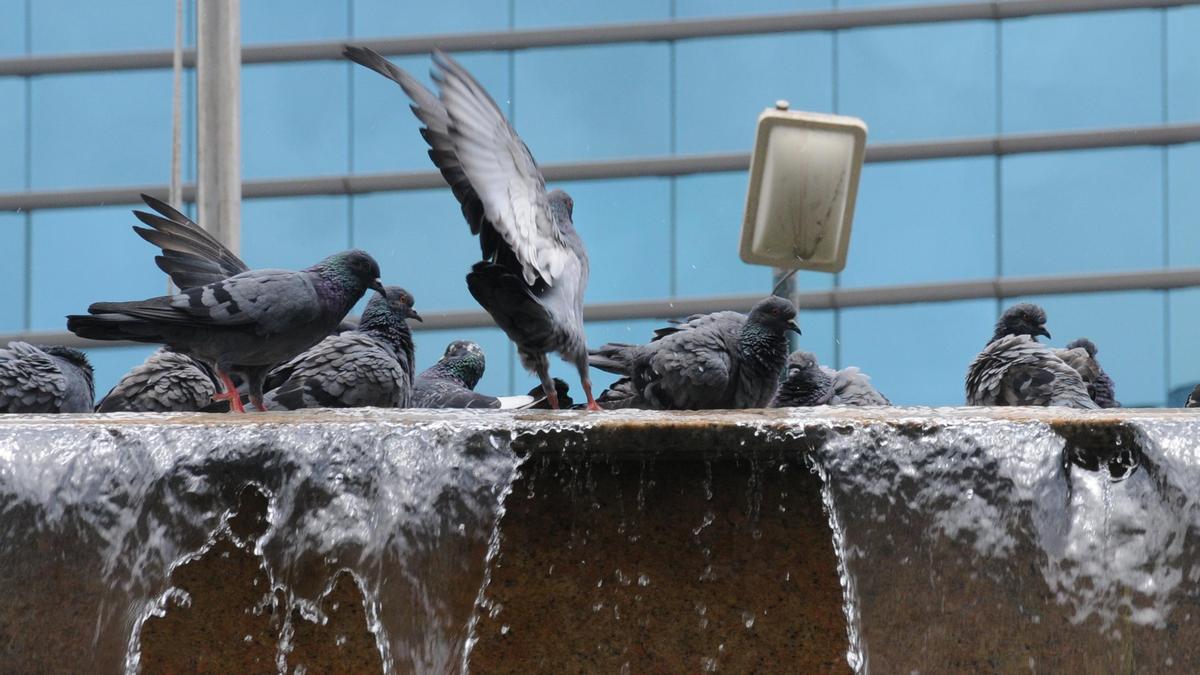
On July 3 this year, the Maharashtra government ordered the Brihanmumbai Municipal Corporation (BMC) of Mumbai to immediately shut down all 51 kabutarkhanas in the city, citing health hazards arising out of pigeon droppings and feathers. The BMC subsequently banned public feeding of pigeons, leading to legal challenges in the Bombay High Court. The Court did not stay the order, but said a committee of experts could study if the old kabutarkhanas should continue, while stressing that “human life is of paramount importance”. The Corporation’s decision, however, triggered opposition from sections of the Jain and Gujarati communities who consider feeding pigeons a daily act of compassion.
The disagreement has moved beyond civic hygiene to questions of health communication, faith, and evidence. Large cities create stable conditions for pigeon colonies. Continuous feeding at kabutarkhanas and open markets ensures an uninterrupted food supply for pigeons. Modern buildings provide nesting ledges and shaded ducts. The absence of predators and the surplus food grain availability further support survival. In densely-populated neighbourhoods, this output accumulates on rooftops, ducts, balconies, and public squares. The droppings dry into fine dust and are dispersed through the air or during cleaning. The organic matter in them supports bacterial and fungal growth.

Disease and exposure
Pigeon droppings are known reservoirs of Histoplasma capsulatum and Cryptococcus neoformans. Inhalation of these spores can lead to respiratory illness, particularly in people with weakened immunity. Chlamydia psittaci may cause psittacosis, and enteric bacteria such as Salmonella and E. coli have been detected on contaminated surfaces. Workers who clean terraces or monuments often face repeated contact with accumulated droppings and may inhale fine particulate matter carrying microbes, which could potentially cause illnesses.
Health effects arise primarily from allergies rather than infections. Proteins from pigeon feathers and droppings can trigger hypersensitivity pneumonitis in some people. The immune response produces inflammation in the alveoli and surrounding lung tissue. Over the years, chronic inflammation may lead to fibrosis and progressive reduction in lung capacity. This condition, sometimes called pigeon fancier’s lung, does not spread from one person to another. It represents an immune reaction unique to those genetically predisposed to allergy. In sensitised individuals, even short exposure can precipitate symptoms and cause serious health hazards.
Early symptoms include dry cough, breathlessness, and fatigue that worsens on re-exposure. Imaging often shows diffuse lung shadows. Pulmonary function tests reveal a restrictive pattern. Removal of pigeon droppings from the exposure environment usually improves symptoms, while continued exposure can lead to irreversible fibrosis. Corticosteroids remain the main line of management. Diagnosis requires clinical suspicion and immunological testing for bird antigens. Because it mimics other respiratory diseases, many cases remain undetected or are labelled chronic bronchitis. Systematic recording of cases under the Integrated Health Information Platform (IHIP) would help estimate the true burden, but such surveillance is absent in routine health statistics.
The prognosis of diseases arising from pigeon droppings varies with the underlying condition, duration of exposure, and host susceptibility. In hypersensitivity pneumonitis, early recognition and removal from exposure usually lead to a good prognosis, but chronic or repeated exposure can result in irreversible interstitial fibrosis and long-term respiratory limitation. Fungal infections such as histoplasmosis and cryptococcosis, if diagnosed late, lead to disseminated disease in immunocompromised individuals and carry a guarded prognosis. Psittacosis caused by Chlamydia psittaci responds effectively to tetracycline-based treatment with minimal sequelae. Allergic bronchitis and asthma-like conditions improve with corticosteroids and avoidance of exposure. Overall, the outlook ranges from complete recovery in early, self-limiting cases, to chronic respiratory impairment or fatality in severe, untreated, or immunocompromised patients.

Quantifying burden
Urban health authorities estimate that thousands of pigeons inhabit a single ward in Mumbai. Multiplying by their average annual droppings gives a load of several hundred tonnes of droppings across the city each year. The droppings contain uric acid, nitrates, and organic debris that decay and release ammonia and other gases. Rainwater mixes with droppings and washes residues into drains. When dry, they become airborne, contributing to fine particulate matter. Although their share in air pollution is minor, local exposure near dense colonies is significant. Maintenance costs for cleaning and restoration of building surfaces rise proportionally.
Droppings deposited on monuments and facades react chemically with stone and metal. Over time, they erode surfaces and increase corrosion. On the ground, nutrient enrichment changes soil composition and plant diversity. Accumulated nests attract mites and fleas that can enter nearby homes. Combining aesthetic nuisance, material damage, and microbial growth makes pigeon control an environmental rather than a purely medical issue. Ecologists note that cities with high pigeon density also show lower diversity of native birds, suggesting competition for nesting sites.

Communication challenges
Communicating the risk of allergic disease is challenging because it is selective, not universal. Unlike an infectious outbreak, where transmission affects all community members, allergic reactions depend on host susceptibility. People with certain genetic markers or a background of asthma and atopy are more likely to react to pigeon antigens. The majority of residents may remain unaffected despite identical exposure. This uneven pattern of vulnerability complicates public messaging. When health authorities describe pigeon droppings as a hazard, some citizens question the warning because visible illness is rare. The difference between infection and allergy must therefore be conveyed clearly. Allergic risk demands preventive awareness rather than alarm. Explaining this selective risk requires precise language. Overstatement may generate unnecessary fear, while understatement sustains risky practices. Authorities must describe the biological mechanism and the preventive behaviour expected from citizens.

Balancing coexistence
Pigeons multiply rapidly under urban conditions. A monogamous pair can produce up to six broods a year, with two eggs in each, and their offspring mature for breeding within six months. One pair can thus yield 45-50 pigeons in a single year. Abundant food, stable climate, and few predators sustain this expansion. Unlike migratory birds, pigeons remain near feeding zones, forming dense flocks of 20 or more. The absence of natural predators such as hawks or kites makes control dependent on human action. Increasing the population of pigeon predators can gradually restore ecological balance in crowded city environments.Uncontrolled proliferation of pigeons alters environmental and health dynamics. Each bird’s annual contribution of 12 to 15 kilograms of droppings, multiplied by thousands, represents a significant urban waste load. The health effects are uneven but tangible among susceptible groups. Effective policy will depend on transparent communication, shared responsibility, and consistent application of scientific evidence.
(Dr. C. Aravinda is an academic and public health physician. The views expressed are personal. aravindaaiimsjr10@hotmail.com)
Published – October 21, 2025 03:19 pm IST