
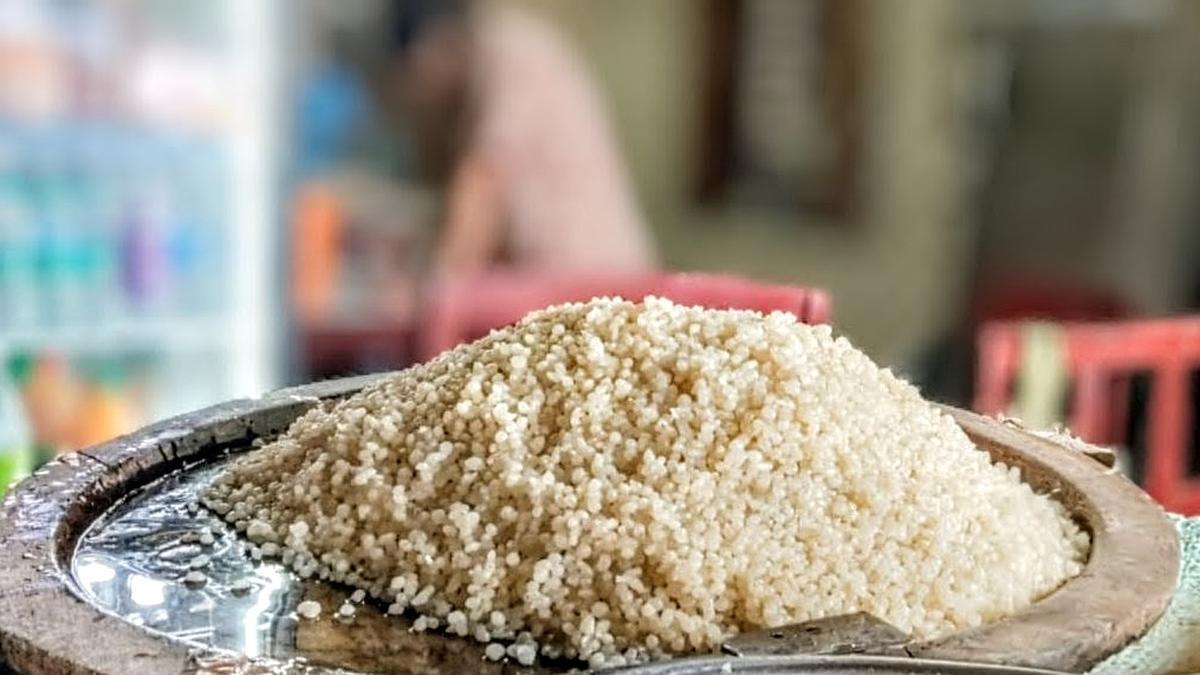
When we think of sweets from Bengal, invariably, roshogolla and mishti doi come to mind. Bundiya, or boondi, is certainly not on the list. Of that, sada bonde is not much heard of.
Bireswar Modak, a fifth generation sweetmaker from the quaint town of Kamarpukur in the Hooghly district of West Bengal, carries on a tradition that spans at least 200 years. His speciality, sada bonde, has earned national recognition. Earlier this year, sada bonde was given the prestigious Geographical Indication (GI) Tag, which protects its identity, origin and cultural significance.
Sada bonde, as the name suggests, means white pearls in English. This is how the delectable sweet appears to be — tiny, plain and spherical shaped — which intrigues travellers, passers-by, and those with a sweet tooth.
While its appearance is similar to the widely known, easily accessible and highly saturated orange-coloured bundiya made from chickpea flour, sada bonde’s simplicity stands out. It has a distinct aroma and flavour that emanates from its star ingredient, roma kolai (yardlong bean seeds). .
For the people of Kamarpukur, the birth place of Ramakrishna Paramahamsa, the revered religious guru and an ardent devotee of the goddess Kali, sada bonde is not just a snack; it’s a cultural and spiritual staple. His fondness for the sweet is well-known amongst his followers, who believe in his teachings of religious harmony, selfless service, and spiritual growth.
Pilgrims from around the world who visit this temple town to pay obeisance to Ramakrishna, never forget to offer sada bonde as prasad at the Ramakrishna Mission and Sarada Ma’s temple in Joyrambati, located seven kilometres away. This unwavering tradition has ensured that the scrumptious sweet’s demand remains high century after century.
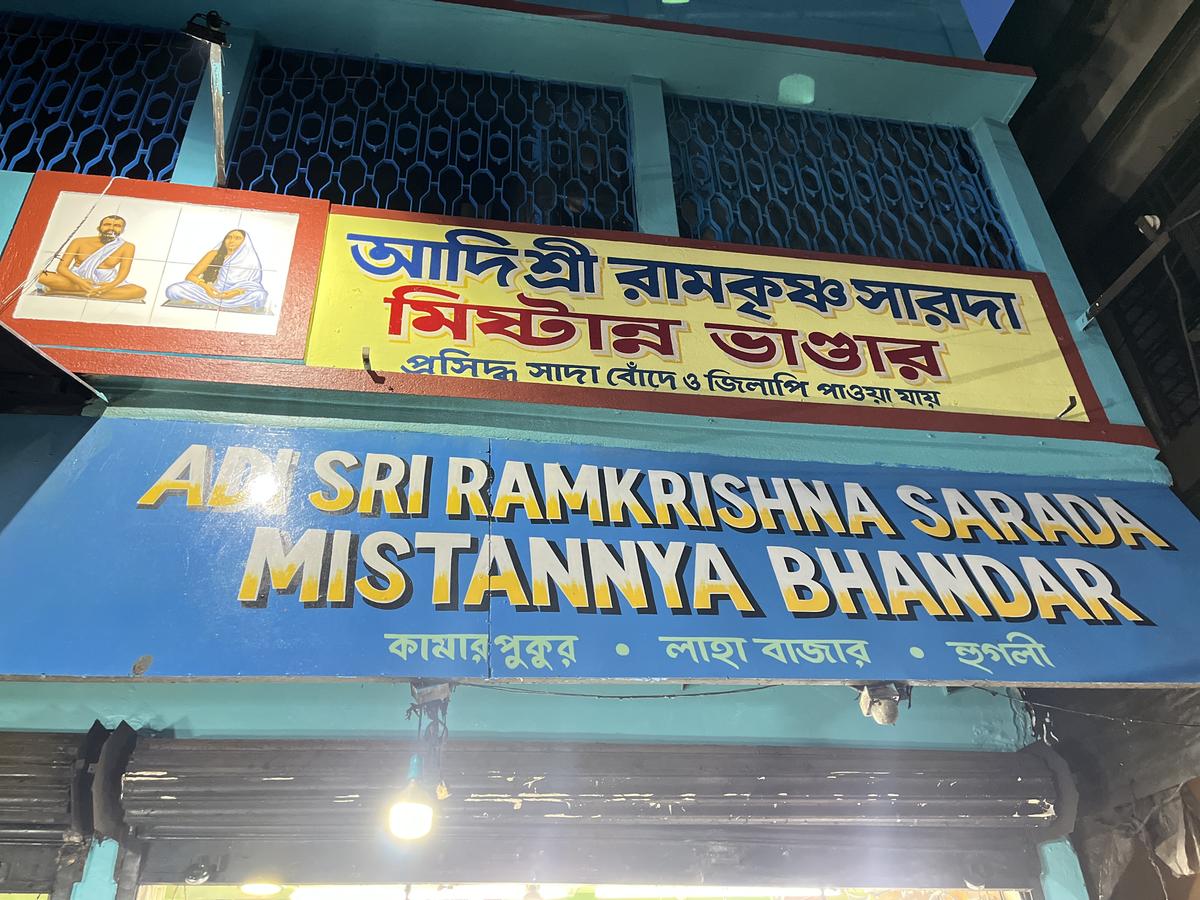
Adi Shri Ramakrishna Sarada Mistanna Bhandar
Food and folklore
Modak spoke with great pride, much like recounting a folklore, about how his great grandfather fed bonde andjilapi (a spiral shaped sweet) made from roma kolai to Ramakrishna in his childhood in the late 1830s. “My family has been in the sweet-making business and making sada bonde even before the birth of Ramakrishna. Our shop was then located in our ancestral home. While the sweet’s exact year of origin is a mystery, its popularity soared after thakur’s (the mystic guru) deep liking for it became widely known,” he added.
The family’s shop, Adi Shri Ramakrishna Sarada Mistanna Bhandar, has been located adjacent to the Ramakrishna Mission complex for nearly 50 years.
Sada Bonde is made in large quantities during Durga Puja and Kali Puja as people in large numbers visit Kamarpukur at that time. Sweet makers from Kolkata and people celebrating the festivals place preorders for bulk quantities. Modak said, “We prepare large quantities of sada bonde during the festive season. At times, we get sudden orders, sometimes in quintals, from the Mission. We are currently in talks with a devotee who wants to order a quintal to donate to the Dakshineswar temple. During the Phalgun Mela this year, we had an order for five quintals for Belur Math.”
While some travellers enjoy the slow pace of life and consider Kamarpukur to be a good escape from the cacophony of city life, some with a sweet tooth like 67-year-old Manju Mallik from the North 24 Parganas district, who secretly harbour the desire to relish sada bonde, revisit the town.
Her eyes gleamed as she vividly described the sweet as “soft, supple and mildly sweet,” adding, “I packed a large quantity to take home for my family and friends.”
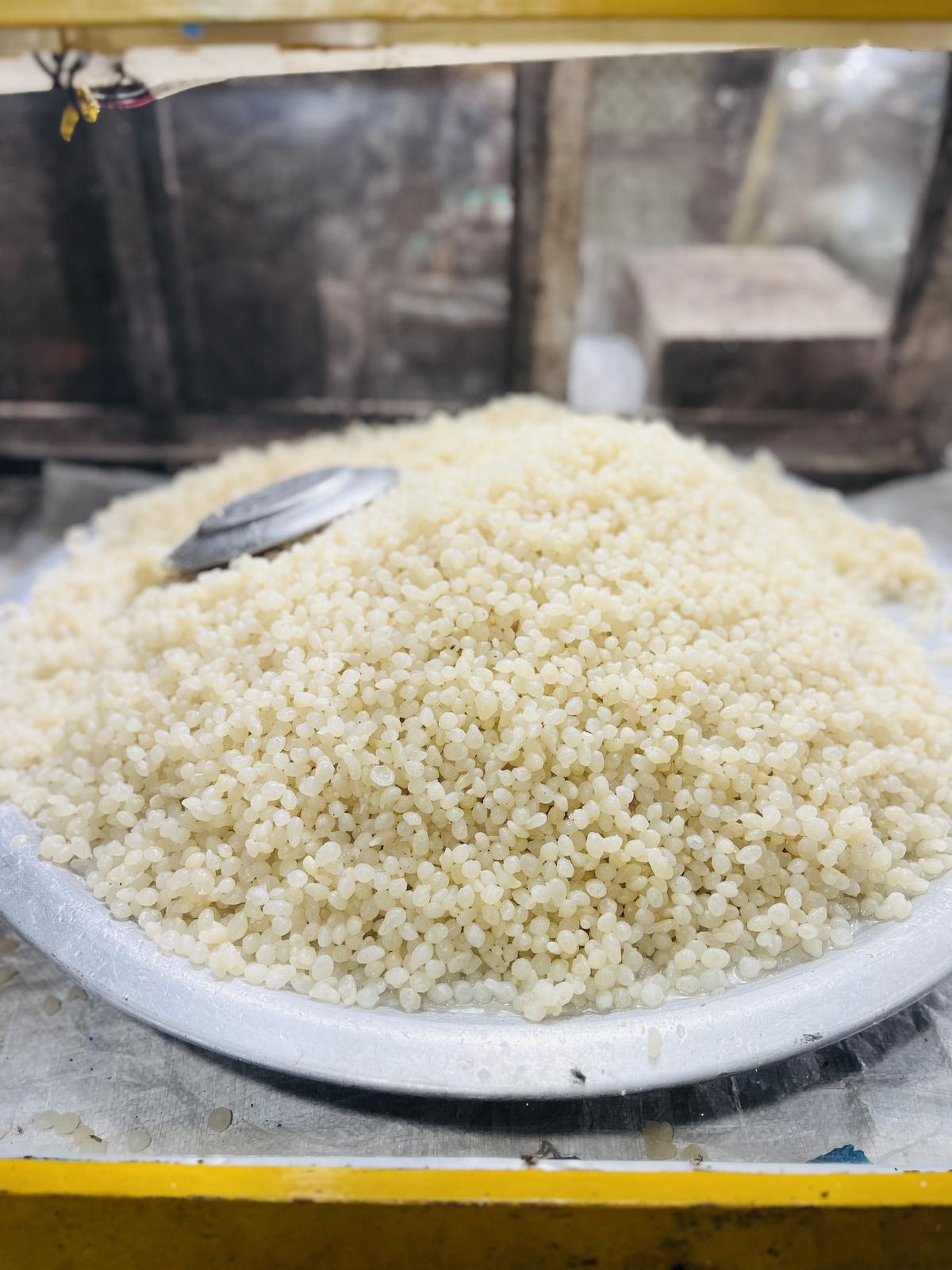
Sada bonde
Through generations
Modak reveals that the recipe has been carefully preserved through the generations, retaining its original flavour. Earlier, yardlong beans were grown in this region and consumed as vegetables, with the seeds being preserved to make sada bonde. Now, roma kolai also called borboti kolai is sourced from other regions.
Apart from roma kolai, the other ingredients used are atop chal (sun-dried rice), sugar and oil.
“Using Gobindobhog rice instead of atop chal and ghee instead of oil enhances the flavour, but the cost would increase threefold, which the locals would not be able to afford,” he explains. While the cost of sada bonde is ₹140 per kg in Kamarpukur, in Kolkata and the neighbourhood where the sweet is scantily sold it can fetch up to ₹300 per kg.
“Earlier it was sold and measured at 25 paisa per ser,” said the sweetmaker, referring to an earlier unit of measurement.
While the GI tag has not brought much change in the demand and supply of the sweet yet, Modak is optimistic. He believes that it will eventually boost the sweet’s popularity, attract more tourists to the town, further strengthening the local economy.
Published – October 21, 2025 03:39 pm IST